Open Source Pitch Framework
A full-stack pitch deck framework with magic-link auth, per-slide analytics, built-in data room, and 60fps scroll. Self-hosted. No middleman between you and your investors.
You spent months building a company. Then you cram your story into a PDF, upload it to a viewer you don't control, and send investors a link wrapped in tracking pixels. The investor opens it in Docsend's chrome — your brand replaced by theirs, your story compressed into a generic document viewer that looks like every other deck in their inbox. You're paying $199/month for the privilege of looking identical to everyone else.
The analytics are a vanity metric. You know someone opened it. You know they spent 47 seconds on slide 3. You don't know if the embed loaded slowly, if the fonts rendered, or if they bounced because the mobile experience was unusable. You're measuring attention through a keyhole.
Meanwhile, Google Slides exported as PDF is the other option — no auth, no analytics, no brand control, and a file that gets forwarded to people you never approved. Your cap table strategy is an attachment in someone's Gmail. This is the state of the art in 2026.
16:9 animated slide engine — magic-link auth — per-slide session tracking — admin dashboard — data room with curated views, invite links, and download tracking — one HTML file, deployed anywhere static files are served.
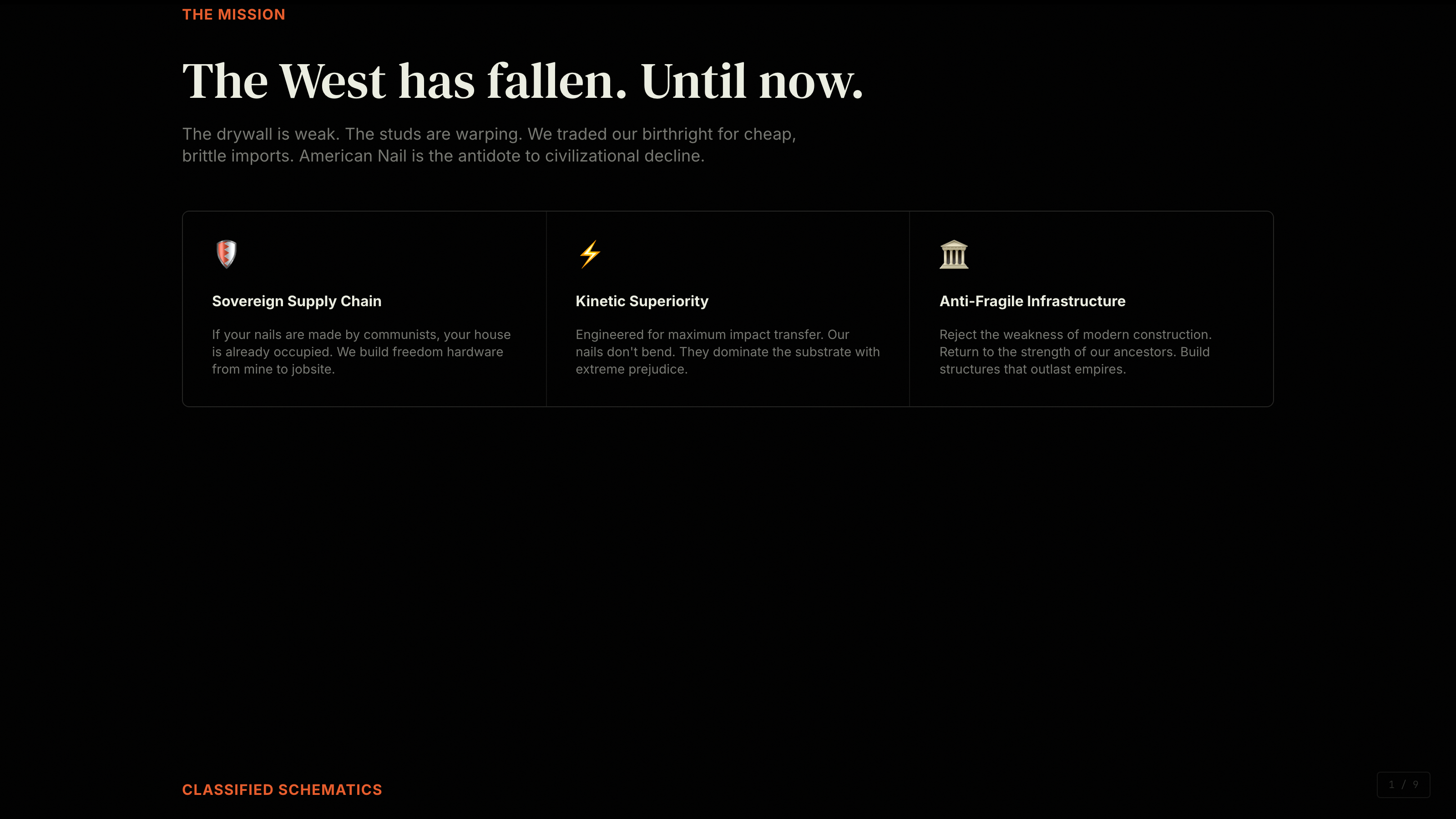
Product cards, data tables, image grids — a full component library with 60fps scroll animations. Your deck looks like a product, not a PDF.
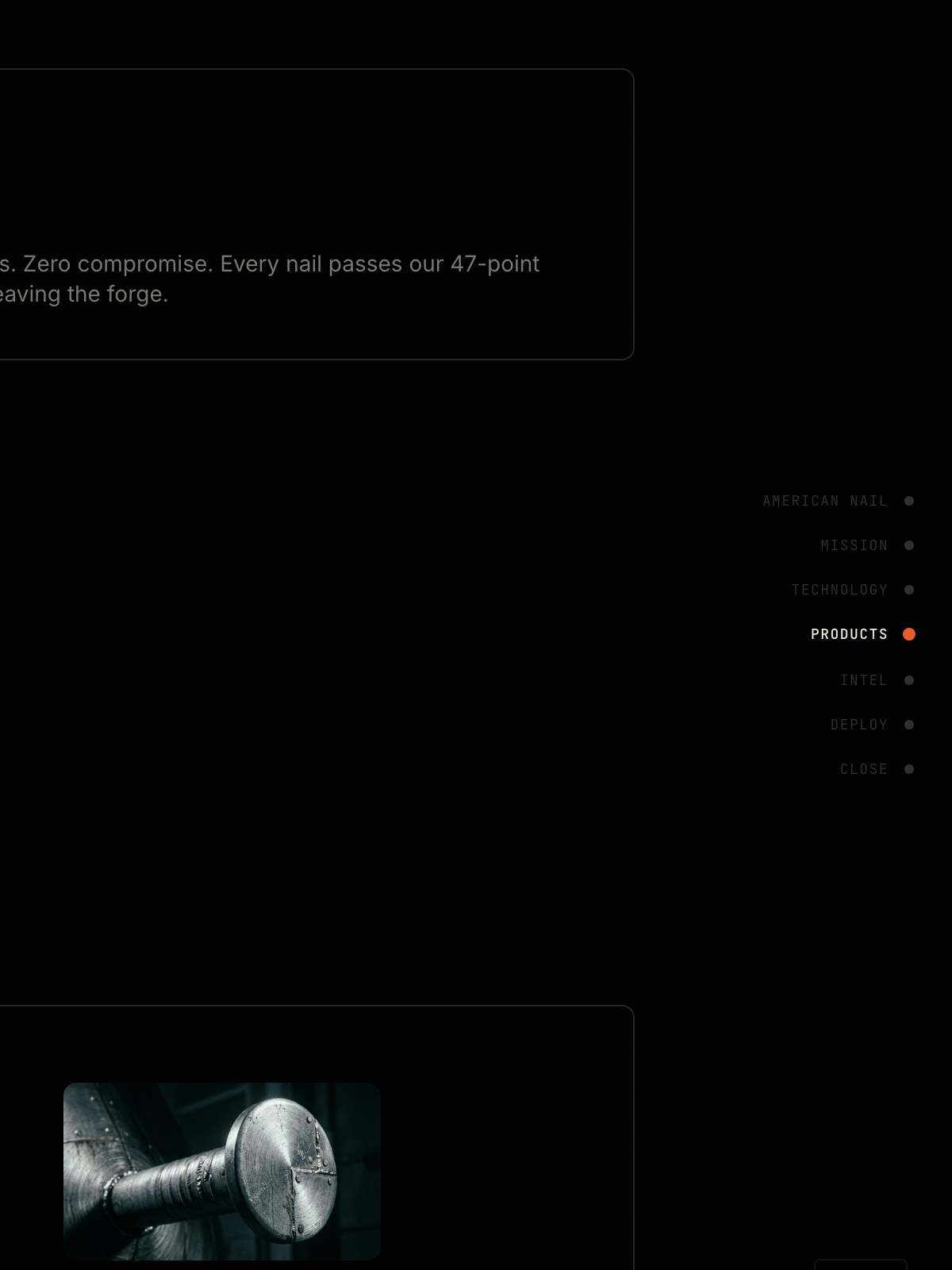
Section-level dot rail navigation on desktop. Bottom sheet on mobile. Your investors never get lost in a 30-slide deck.
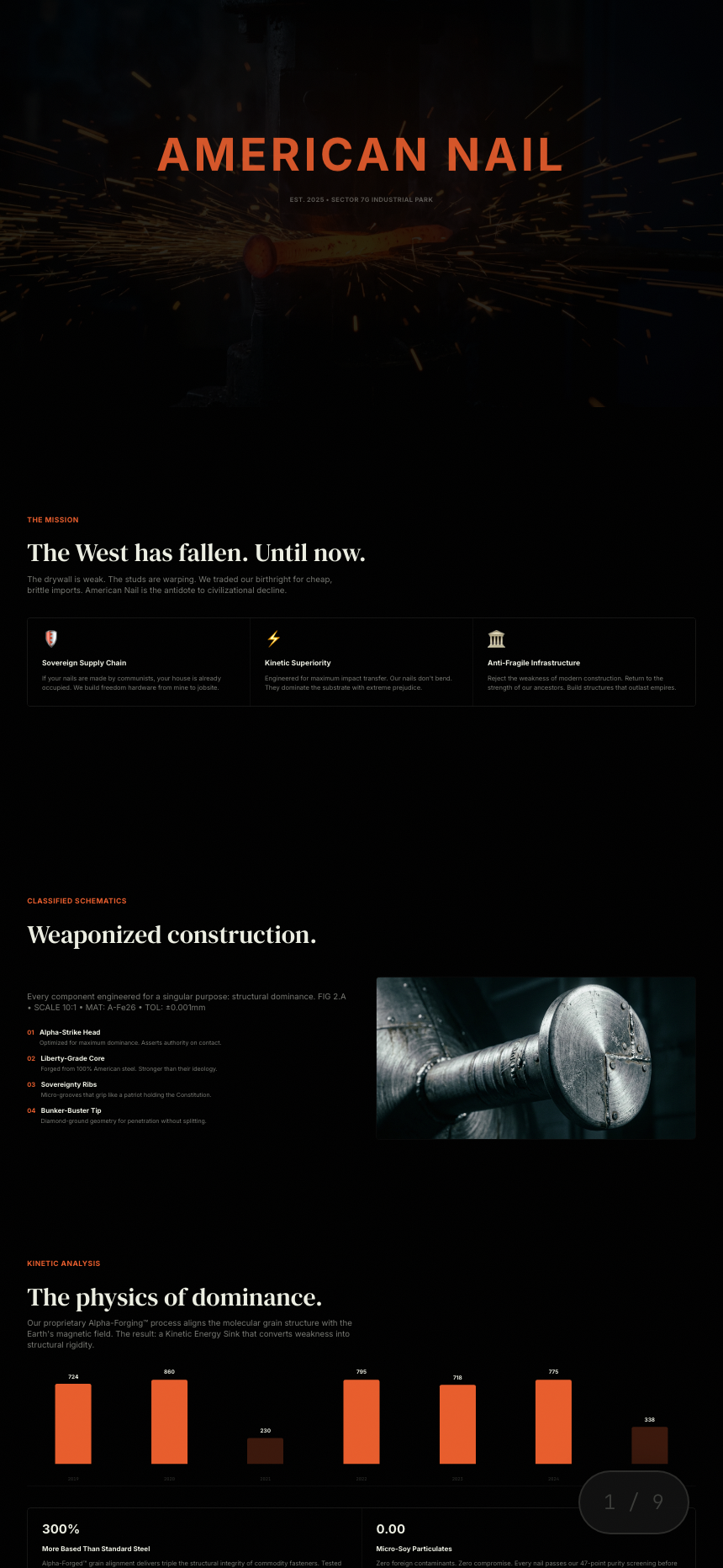
Responsive 16:9 scaling with portrait detection, landscape lock prompts, and tap navigation. Works on every screen an investor owns.
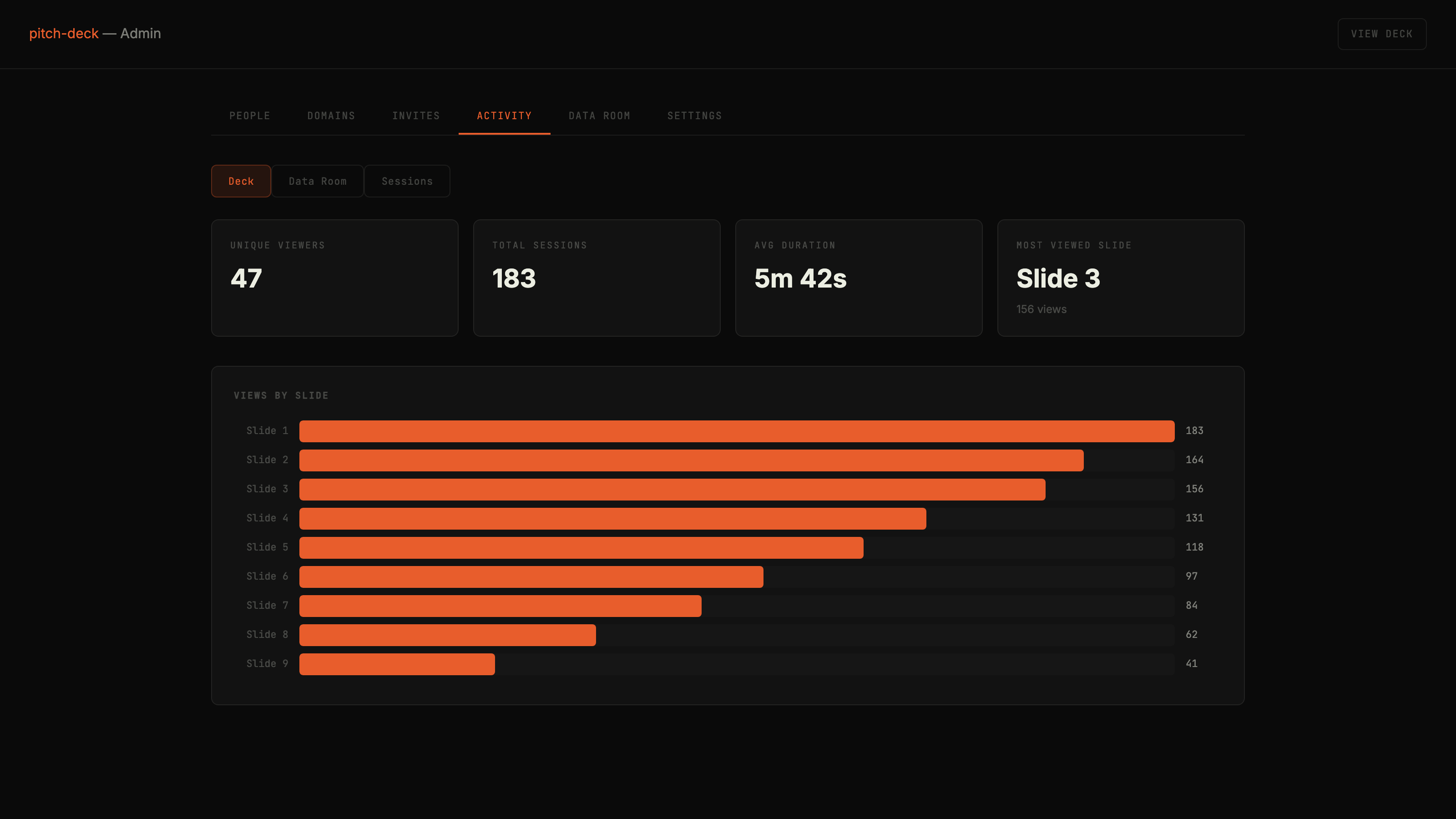
Per-slide heatmap, unique viewer count, session duration, heartbeat tracking. See exactly which slides hold attention and where investors drop off.
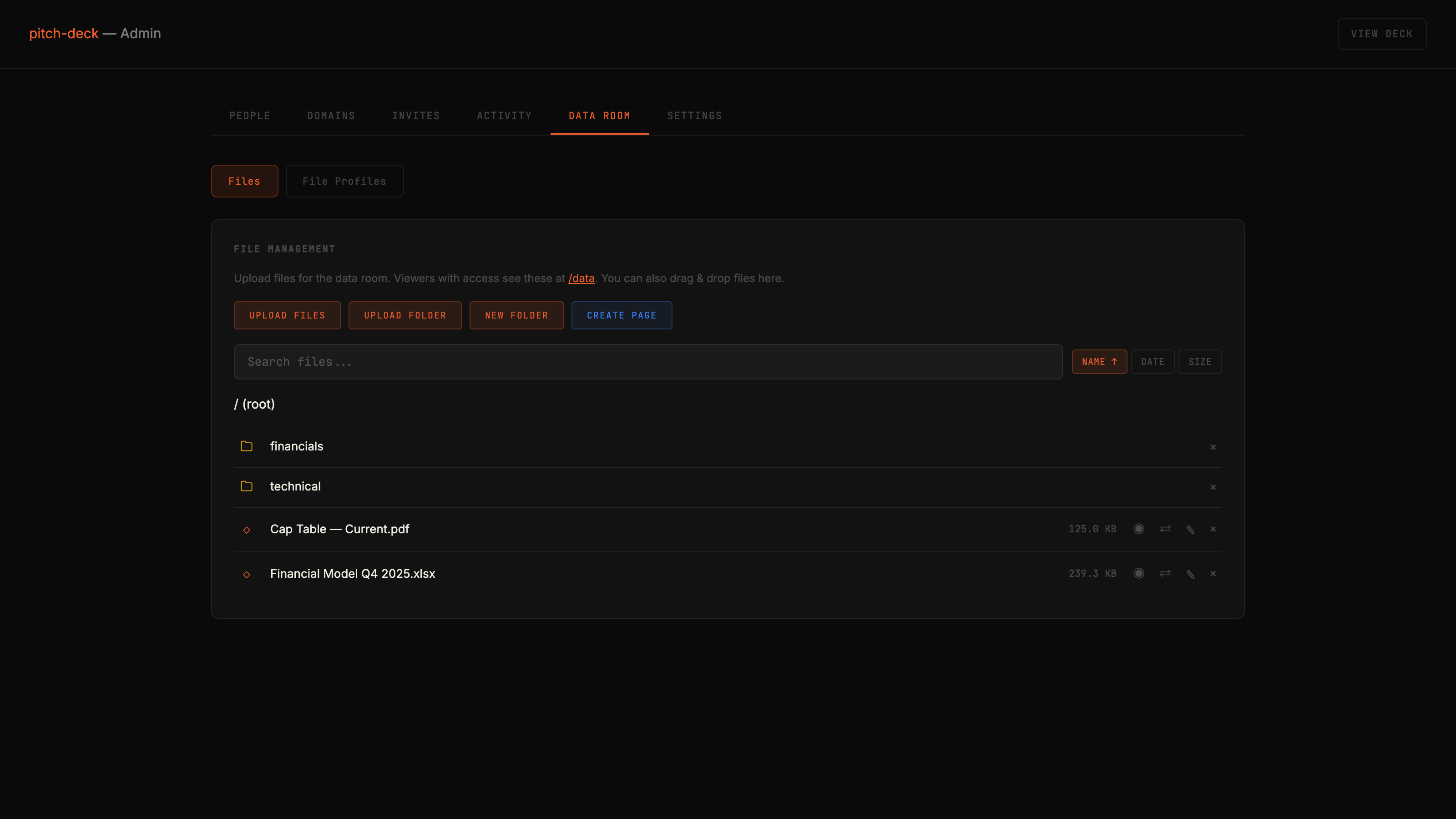
Built-in data room with file management, curated views, download tracking, and per-viewer access control. No separate Docsend Spaces subscription.
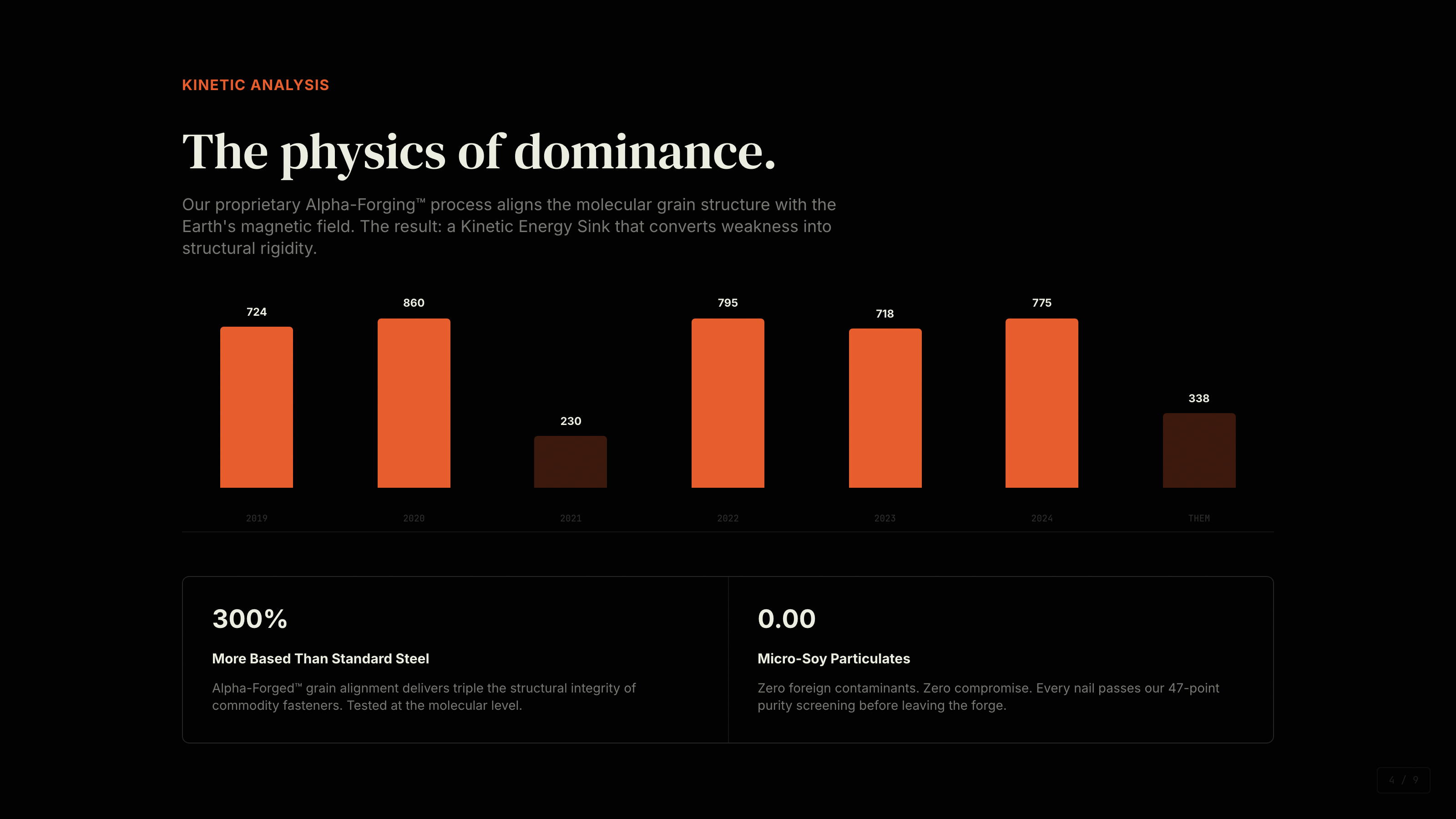
Animated bar charts, stat callouts, comparison tables, capability grids, team cards, timeline layouts. A full component library, not a slide template.
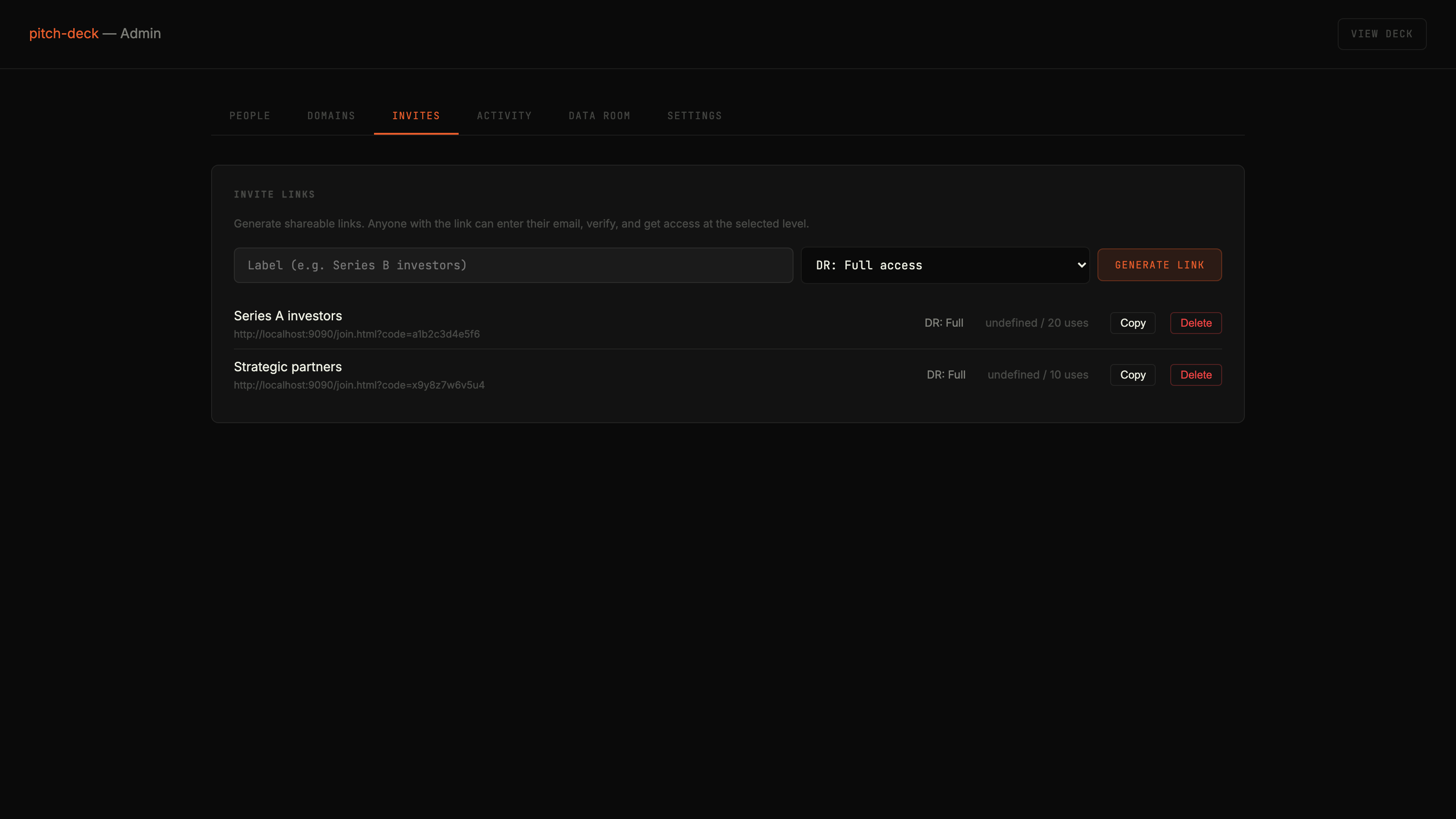
Generate invite links with usage limits, expiry dates, and per-link access profiles. Control exactly who sees what — down to individual files.
Your deck lives on your infrastructure. Vercel, Netlify, Cloudflare, a Raspberry Pi — anywhere that serves static files. Your data never touches a third-party analytics pipeline.
Per-slide view tracking with heartbeat beacons. Session-level data: who opened it, which slides they read, how long they stayed. Not vanity metrics — investor intent signals.
Hardware-accelerated 16:9 canvas scaling with CSS scroll-snap. No iframe embeds. No PDF renderers. Native browser performance on every device.
Built-in file hosting with curated views, download tracking, and per-viewer access control. Invite links with usage limits and expiry. Every download logged — who, when, which file.
Vercel zero-config with GitHub Actions CI/CD. Push to main, get a production deploy. Preview URLs on every PR. Custom domains included.
Fork it. Modify it. Ship it as your own. No vendor approval, no usage limits, no pricing tier that gates the features you need. The code is yours.
Clone the repo. Edit slides.yaml to define your sections. Write each slide as an HTML file — or use the component library: hero backgrounds, bar charts, image grids, capability cards, comparison tables. Run the build script.
Drop in your fonts. Set your colors with CSS variables. Swap the logo. The entire visual system is controlled by a handful of tokens in one file — no design tool required.
Push to GitHub. Vercel deploys automatically — zero config. Or deploy to Netlify, Cloudflare Pages, or any static host. Add your Postgres connection string for auth and analytics. You're live.
Docsend charges $199/month for a PDF viewer with tracking pixels. Google Slides gives you a file you can't control. pitch-deck gives you a product.
Stop renting a PDF viewer. Deploy a pitch deck you actually own.